

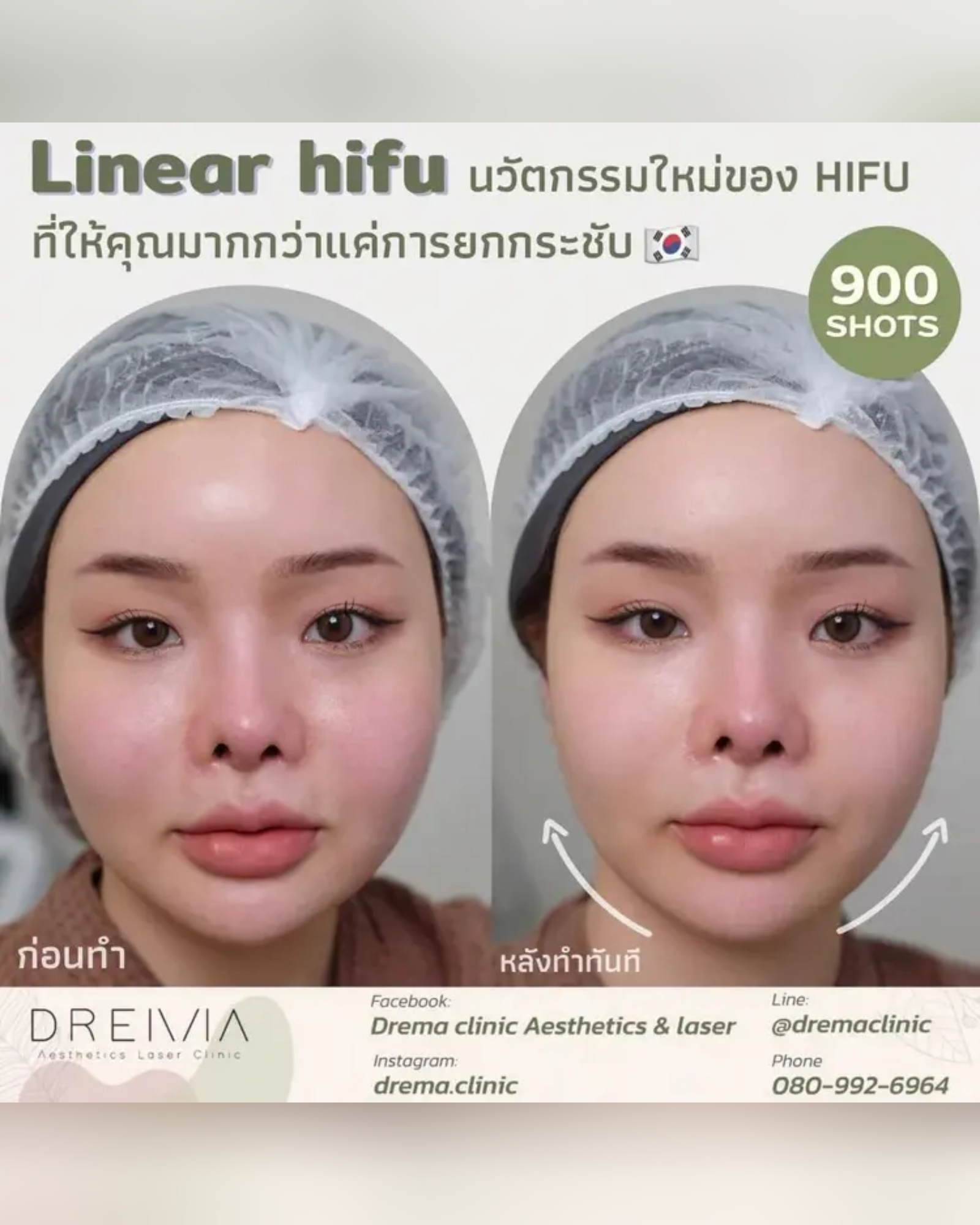
HIFU and thread lifting are frequently compared because both are non-surgical lifting approaches. However, they do not work in the same way and are not interchangeable in every case.
A practical decision should be based on sagging severity, contour goals, tissue quality, and whether immediate support or progressive tightening is the main priority.
What is HIFU?
HIFU uses focused ultrasound energy to stimulate deeper tissue contraction and collagen remodeling. Improvement is often progressive over weeks to months.
What is thread lifting?
Thread lifting uses absorbable threads to support and reposition tissue in specific vectors. In selected cases, early contour change can be seen sooner than energy-only approaches.
Key differences
- HIFU: energy-based tightening with gradual response
- Thread lifting: mechanical support with vector-guided lift
- Both can be sequenced together in selected protocols
When HIFU may be preferred
- Mild laxity and skin-quality optimization goals
- Patients prioritizing non-insertion treatment flow
When thread lifting may be preferred
- Visible contour descent needing stronger support
- Jawline and lower-face reshaping goals
Can they be combined?
Yes, combination planning is common in selected patients. Sequence and timing should be physician-defined to protect safety and optimize tissue response.
How to choose wisely
- Start with diagnosis, not device preference
- Set realistic goals for natural contour improvement
- Follow a staged treatment and maintenance plan
Summary
The better treatment is the one matched to your real anatomy and goals. Physician-led planning determines whether HIFU, thread lifting, or combination sequencing gives the most balanced outcome.
Related reading
• Thread Lifting: What It Is, Benefits, Thread Types, and Who It Is For
• Best Thread Lift for Double Chin: Technique Selection and Jawline Planning
• Explore category: Thread Lift
• View patient outcomes: Reviews